Smartphones & Tablets
Smartphones and tablets have fundamentally transformed how we communicate, work, and entertain ourselves. These pocket-sized powerhouses and their larger tablet counterparts have become indispensable tools in modern life, yet the technology behind them evolves at a breathtaking pace. Understanding what makes these devices tick—from the processors that power them to the screens that display your content—empowers you to make informed decisions and get the most value from your investment.
Whether you’re considering your first smartphone, upgrading to a newer model, or exploring tablets for work or creativity, this comprehensive resource will demystify the core concepts. We’ll explore the fundamental differences between device types, decode the technical specifications that actually matter, compare the major software ecosystems, and provide practical insights to help you navigate this dynamic landscape with confidence.
Understanding Device Types and Categories
The mobile device market offers more variety than ever before, and recognizing the distinctions between categories helps clarify which type best suits your lifestyle. At the most basic level, smartphones are pocket-sized devices typically featuring screens between 5 and 7 inches, designed primarily for one-handed use and constant portability. They excel at communication, quick tasks, and on-the-go access to apps and information.
Tablets, conversely, feature larger displays ranging from 7 to 13 inches or more, prioritizing screen real estate for content consumption, productivity, and creative work. Think of tablets as the bridge between your smartphone and laptop—they offer more comfortable typing surfaces, better multitasking capabilities, and superior viewing experiences for videos, reading, and digital art, while maintaining the touch-first interface and portability that defines mobile computing.
The lines have blurred with the emergence of phablets—smartphones with screens exceeding 6.5 inches—and compact tablets around 7-8 inches. Some manufacturers now offer foldable devices that transform from phone to tablet form factors. Your choice ultimately depends on your primary use cases: constant portability and communication favor smartphones, while content creation, media consumption, and split-screen productivity lean toward tablets.
Key Hardware Components That Define Performance
Understanding the internal components of smartphones and tablets demystifies those lengthy specification sheets and helps you identify genuine performance differences. Several core elements work in concert to determine how smoothly your device operates.
Processors and RAM: The Brain and Working Memory
The processor (or chipset) functions as your device’s brain, executing every task from launching apps to processing photos. Modern mobile processors integrate multiple specialized cores: high-performance cores for demanding tasks and efficiency cores for routine operations, balancing power and battery conservation. Leading chipsets like Apple’s A-series, Qualcomm’s Snapdragon, and Samsung’s Exynos represent significant engineering achievements, with performance levels now rivaling entry-level laptops.
RAM (Random Access Memory) serves as your device’s working memory, determining how many apps can run simultaneously without slowing down. Devices with 4GB RAM handle basic multitasking adequately, while 6-8GB provides comfortable headroom for most users. Power users who frequently switch between numerous apps or run memory-intensive applications benefit from 12GB or more.
Storage Capacity and Types
Storage capacity determines how much content—apps, photos, videos, documents—your device can hold. Most modern devices use fast flash storage, typically ranging from 64GB to 1TB. Consider that high-resolution photos consume 3-10MB each, 4K videos require approximately 400MB per minute, and many modern games exceed 2-5GB. A device with 128GB offers a practical baseline for most users, while content creators and media enthusiasts should target 256GB or higher.
Many Android devices offer expandable storage via microSD cards, providing cost-effective capacity increases, though external storage typically operates slower than internal memory and cannot house all app data.
Operating Systems and Software Ecosystems
The operating system represents perhaps the most consequential decision you’ll make, as it defines your entire user experience, available apps, and long-term device value. The mobile landscape is dominated by two major platforms, each with distinct philosophies and strengths.
iOS, Apple’s exclusive operating system for iPhones and iPads, emphasizes seamless integration, security, and longevity. Apple controls both hardware and software, enabling optimization that delivers smooth performance even on older devices. iOS users benefit from typically 5-6 years of software updates, robust privacy features, and an ecosystem that effortlessly connects iPhones, iPads, Macs, and Apple Watches. The trade-off involves less customization freedom and a more curated app environment.
Android, developed by Google but implemented by numerous manufacturers, offers remarkable diversity and customization. You’ll find Android devices at every price point, from budget-friendly options to premium flagships. The platform allows extensive personalization—custom launchers, widgets, default apps—and generally provides more flexibility in file management and inter-app communication. However, software update timelines vary dramatically by manufacturer, with some brands providing only 2-3 years of support while others now promise 5 years or more.
Your choice often hinges on existing investments: if you already own a Mac or use iCloud extensively, iOS integration proves invaluable. If you prioritize choice, customization, and diverse price points, Android’s flexibility shines. Neither platform is objectively superior—they serve different user preferences and priorities.
Display Technology and Screen Quality
The display serves as your primary interface with your device, making screen quality a critical consideration. Modern mobile displays employ sophisticated technologies that significantly impact visual quality, battery efficiency, and user experience.
Panel Technologies: OLED vs. LCD
OLED (Organic Light-Emitting Diode) displays, including variants like AMOLED and Super AMOLED, feature self-illuminating pixels that produce true blacks by completely turning off, resulting in infinite contrast ratios and vibrant colors. OLED screens deliver superior viewing angles, faster response times for smooth scrolling, and better power efficiency when displaying dark content. Premium smartphones and many tablets now employ OLED technology.
LCD (Liquid Crystal Display) panels, particularly IPS (In-Plane Switching) variants, use a backlight behind liquid crystals. While unable to achieve true blacks, quality LCD displays offer excellent color accuracy, typically cost less to manufacture, and avoid potential OLED issues like burn-in with static elements. Many mid-range devices and some flagship tablets utilize advanced LCD technology that narrows the gap with OLED.
Resolution and Refresh Rate
Screen resolution determines pixel count and sharpness. Full HD (1920×1080) provides crisp visuals on most smartphone screens, while Quad HD (2560×1440) or 4K resolutions primarily benefit larger tablets where pixel density matters more for close viewing. Beyond certain thresholds—typically around 400-450 pixels per inch—improvements become imperceptible to most users.
Refresh rate, measured in Hertz (Hz), defines how many times per second the screen updates. Traditional 60Hz displays suffice for general use, but 90Hz and 120Hz screens deliver noticeably smoother scrolling, animations, and gaming experiences. High refresh rates do consume more battery, though adaptive technologies now intelligently adjust rates based on content.
Camera Systems and Photography Capabilities
Smartphone and tablet cameras have evolved from afterthoughts to sophisticated imaging systems that rival dedicated cameras for many users. Understanding the technology behind these tiny lenses helps you evaluate real photographic capability beyond megapixel marketing.
Megapixel count, while important, tells only part of the story. A 12-megapixel camera with a larger sensor and superior lens often outperforms a 48-megapixel camera with tiny sensor pixels. Sensor size determines light-gathering capability—crucial for low-light performance—while larger individual pixels capture more information and reduce noise in challenging conditions.
Modern flagship devices employ multi-camera systems with specialized lenses serving distinct purposes:
- Main/wide lens: Your primary camera for general photography
- Ultra-wide lens: Captures expansive scenes and group photos with 110-120° field of view
- Telephoto lens: Enables optical zoom (typically 2-5x) without quality loss
- Depth or macro sensors: Assist with portrait mode effects or extreme close-ups
Computational photography increasingly defines image quality through software processing. Technologies like night mode composite multiple exposures to produce bright, detailed low-light photos that would be impossible with hardware alone. Portrait modes use depth mapping to simulate professional background blur, while HDR (High Dynamic Range) processing balances bright and dark areas for more natural-looking photos.
Battery Life and Charging Technologies
Battery performance represents one of the most practical considerations for mobile devices, yet it’s influenced by numerous interconnected factors beyond raw capacity. A device with a larger battery doesn’t automatically outlast one with less capacity—efficiency matters enormously.
Battery capacity is measured in milliampere-hours (mAh), with typical smartphones ranging from 3,000 to 5,000+ mAh and tablets from 6,000 to 11,000+ mAh. However, real-world longevity depends on screen efficiency, processor optimization, software management, and usage patterns. An efficient processor and optimized software can enable a 4,000 mAh battery to outlast a poorly optimized 5,000 mAh alternative.
Charging technology has advanced dramatically, addressing one of mobile computing’s traditional pain points:
- Fast charging: Powers devices to 50-80% capacity in 30-45 minutes using higher wattage (20W-120W depending on device)
- Wireless charging: Offers convenient cable-free charging via Qi-compatible pads, though typically slower than wired options
- Reverse wireless charging: Allows your device to charge other compatible devices and accessories
Battery health degrades gradually through charge cycles. Lithium-ion batteries typically retain approximately 80% capacity after 500-800 complete charge cycles (roughly 18-24 months of typical use). Practices like avoiding extreme temperatures, not consistently charging to 100%, and using manufacturer-certified chargers help maximize longevity.
Choosing the Right Device for Your Needs
With foundational knowledge established, selecting the ideal smartphone or tablet becomes a process of matching technical capabilities to your specific requirements and budget. Rather than chasing flagship specifications you may never utilize, focus on identifying must-have features versus nice-to-have luxuries.
Start by honestly assessing your primary use cases. Heavy photographers benefit from superior camera systems with multiple lenses and computational features. Mobile gamers should prioritize powerful processors, ample RAM, high refresh rate displays, and substantial batteries. Productivity users might value larger screens, stylus support, and robust multitasking capabilities. Casual users focused on communication, social media, and light content consumption can achieve excellent experiences with mid-range devices at significantly lower costs.
Consider the ecosystem integration that extends beyond the device itself. If you’re invested in specific services, accessories, or other devices, compatibility matters. Apple’s ecosystem offers unparalleled integration between iPhones, iPads, Macs, and wearables, with features like universal clipboard, AirDrop, and Continuity. Android provides flexibility and cross-platform compatibility, working seamlessly with Windows PCs, Chromebooks, and diverse smart home ecosystems.
Longevity and support significantly impact long-term value. Devices receiving extended software updates remain secure, gain new features, and maintain app compatibility longer. Currently, Apple provides the longest support window (typically 5-6 years), while select Android manufacturers now promise 4-5 years of updates. Budget devices often receive limited support, potentially requiring replacement sooner despite functioning hardware.
Finally, establish a realistic budget and resist the urge to overspend on marginal improvements. The performance gap between flagship and upper mid-range devices has narrowed considerably. Many users find exceptional value in devices priced 30-40% below flagship models, sacrificing minor camera improvements or cutting-edge features while retaining excellent performance, displays, and battery life for everyday tasks.
Understanding the technology empowering smartphones and tablets transforms these seemingly complex devices into approachable tools designed to enhance your digital life. By focusing on the specifications and features that align with your genuine needs—rather than marketing superlatives—you’ll select devices that deliver satisfaction and value for years to come. The mobile landscape continues evolving rapidly, but these fundamental concepts remain constant foundations for informed decision-making.
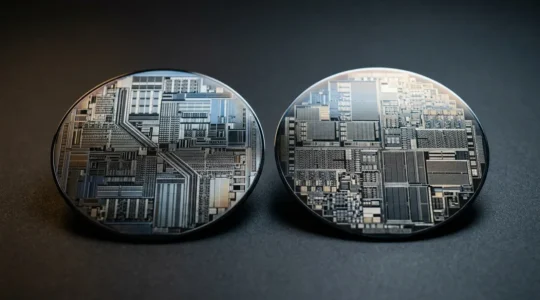
A-Series vs Snapdragon: Which Chipset Retains Performance After 3 Years?
Contrary to popular belief, long-term phone performance isn’t about launch-day speed benchmarks; it’s determined by how a chipset’s architecture manages heat, memory, and power over years of software updates. Thermal throttling strategy, not peak power, defines sustained performance under heavy…
Read more
Is Upgrading to a 5G Phone Worth It If You Live in a Semi-Rural Area?
Upgrading to 5G in a semi-rural area is only worthwhile if you first verify that ‘low-band’ or ‘mid-band’ 5G offers a tangible performance uplift over 4G LTE at your specific locations. Carrier maps are marketing tools; use crowd-sourced apps like…
Read more
Can a $800 Smartphone Truly Replace a DSLR Camera for Real Estate Photography?
The debate isn’t whether your $800 phone’s camera is good enough for listings—it’s whether your business can survive when your camera, office, and keys all exist in one fragile device. Physical limitations in sensors and screen durability create real-world failure…
Read more