Accessories & Peripherals
The devices we use every day are only as good as the accessories surrounding them. A powerful gaming PC means little if thermal throttling cripples performance. The most advanced smartphone becomes vulnerable without proper protection. Your favorite playlist loses its magic through poorly fitting earbuds. Accessories and peripherals bridge the gap between raw hardware potential and real-world satisfaction.
This category spans an impressive range: from the headsets that deliver spatial audio in competitive shooters, to the cooling solutions keeping processors alive under heavy loads, to the smartwatches monitoring your heart rate during workouts. Each subcategory carries its own technical vocabulary, common misconceptions, and hidden pitfalls that manufacturers rarely advertise.
Whether you are building your first sim-racing cockpit in a cramped apartment or trying to understand why your wireless earbuds keep disconnecting, this resource covers the foundational knowledge you need. Think of it as your map through a landscape where marketing claims often overshadow practical reality.
Why Do Gaming Headsets Cause Discomfort and How Can You Fix It?
Gaming headsets combine multiple engineering challenges into one device: sound reproduction, microphone clarity, wireless stability, and ergonomic comfort for sessions lasting several hours. Understanding each element helps you avoid expensive mistakes.
The Clamping Force and Padding Problem
That persistent headache after two hours of gaming rarely comes from eye strain alone. Clamping force—the pressure headband arms exert on your skull—varies dramatically between models. Headsets designed for smaller heads become torture devices on larger ones. Faux leather earpads, while initially plush, typically degrade within twelve months, flattening and cracking until the drivers press directly against your ears.
Memory foam with breathable fabric covers offers longer lifespan. Some users stretch new headsets over books overnight to reduce clamping, though this risks voiding warranties on certain brands.
The 7.1 Surround Sound Marketing Trap
Virtual surround sound in stereo headsets relies on software processing, not physical speaker arrays. While some implementations genuinely improve spatial awareness, many simply add reverb that muddies directional cues. Competitive players often disable these features entirely, preferring clean stereo imaging that accurately positions footsteps and gunshots.
Open-Back Versus Closed-Back Designs
Open-back headphones leak sound both ways—your game audio escapes, and ambient noise enters. This design creates a wider soundstage, making audio feel less trapped inside your head. Closed-back models isolate better but can feel claustrophobic during extended use. The choice depends on your environment: quiet home offices favor open-back immersion, while shared spaces demand isolation.
Wireless Earbuds: Codecs, Fit, and Battery Longevity
True wireless earbuds have evolved from convenience accessories into serious audio devices. However, physics and chemistry impose limitations that marketing materials conveniently ignore.
Understanding Bluetooth Audio Codecs
The audio codec your earbuds negotiate with your source device determines maximum quality. AAC works well on Apple devices but performs inconsistently on Android. AptX and LDAC offer higher bitrates, theoretically closer to CD quality. In practice, most listeners cannot distinguish these codecs when streaming compressed audio from typical music services. The bottleneck usually sits upstream, not in the wireless link.
Why In-Ear Designs Cause Pain
Ear canal shapes vary enormously between individuals. Standard silicone tips create pressure points for many users after ninety minutes of continuous wear. Foam tips conform better but require replacement every few months. The angle of insertion matters too—pointing drivers toward your ear canal rather than straight in often improves both comfort and bass response.
Charging Habits That Destroy Battery Capacity
Lithium-ion batteries degrade fastest when held at full charge or drained completely. Leaving earbuds in their case overnight, constantly topped to one hundred percent, accelerates capacity loss. Storing them at roughly fifty percent charge when unused for extended periods preserves longevity. Most manufacturers recommend avoiding fast charging whenever possible.
PC Cooling: Airflow Physics and Maintenance Realities
Effective cooling determines whether your processor delivers consistent performance or throttles during demanding tasks. The basics involve moving heat away from components, but implementation details separate quiet efficiency from noisy inadequacy.
Air Cooling Versus Liquid Cooling Trade-offs
Tower air coolers remain remarkably effective, with high-end models matching all-in-one liquid coolers in thermal performance. Their simplicity means fewer failure points—no pumps to fail, no coolant to potentially leak. AIO liquid coolers excel in compact cases where large air coolers cannot fit, and they maintain lower temperatures under sustained loads.
However, AIO pumps eventually wear out. That grinding or clicking noise after a few years signals impending failure. Replacing the entire unit becomes necessary since most AIOs use sealed, non-serviceable designs.
Positive Versus Negative Pressure Configurations
Case pressure describes whether more air enters or exits through fans. Positive pressure—more intake than exhaust—reduces dust accumulation since air enters only through filtered fans. Negative pressure pulls unfiltered air through every gap and crevice, coating components in dust far faster. Balanced configurations with slightly positive bias typically offer the best compromise.
Thermal Paste Application Techniques
The endless debate between pea-sized dots, lines, and spreading methods mostly misses the point. Modern thermal pastes spread adequately under mounting pressure regardless of pattern. What matters more: using appropriate quantity (roughly rice-grain to pea-sized for consumer CPUs) and ensuring even contact without air bubbles. Spreading manually risks introducing those bubbles.
Phone Cases: Protection Claims Versus Physical Reality
Smartphone protection represents a balance between bulk, aesthetics, and genuine damage prevention. Marketing terminology often obscures what actually happens during impacts.
Material Science Behind Shock Absorption
TPU (thermoplastic polyurethane) flexes and absorbs energy, making it excellent for shock absorption but prone to yellowing over time. Polycarbonate offers rigidity and scratch resistance but transfers more impact force to the device. Hybrid cases combining both materials leverage each strength: flexible TPU interiors with rigid polycarbonate shells.
Why Corner Drops Defeat Military-Grade Claims
Military drop specifications typically test flat surface impacts, not corner strikes. Corners concentrate force into tiny contact areas, overwhelming protection designed for distributed impacts. Cases with reinforced corner bumpers or air-cushion technology specifically address this vulnerability.
The Hidden Abrasion Problem
Dirt particles trapped between phone and case act like sandpaper during normal handling. Every pocket insertion grinds debris against the back glass. Regular cleaning of both device and case interior prevents this gradual damage that accumulates invisibly until scratches become obvious.
VR Headsets: Immersion, Nausea, and Physical Comfort
Virtual reality demands more from peripherals than any other computing application. Display technology, motion tracking, and ergonomics must work in precise harmony, or the experience fails completely.
Refresh Rates and Motion Sickness
When visual updates lag behind head movement, the brain receives conflicting signals from eyes and inner ear. This mismatch triggers nausea in roughly forty percent of users when refresh rates drop below ninety hertz. Higher refresh rates reduce this latency, making smooth operation essential rather than merely preferable.
Tracking System Differences
Inside-out tracking uses cameras on the headset itself, eliminating external sensors but creating blind spots behind your back or beneath desks. Base station systems track with external infrared emitters, offering superior accuracy and coverage at higher cost and setup complexity. Your play space and intended applications determine which trade-off makes sense.
Comfort Modifications for Extended Sessions
Stock head straps rarely distribute weight optimally. Third-party straps with rear counterweights shift pressure from facial interfaces to the skull crown, dramatically reducing neck strain during long sessions. Prescription lens inserts eliminate the need to wear glasses inside cramped headset cavities.
Smartwatches and Fitness Trackers: Data Accuracy and Wearability
Wearable health technology promises medical-grade insights from consumer devices. Reality proves more nuanced, with accuracy varying dramatically based on sensor type, placement, and activity.
Optical Heart Rate Versus Chest Straps
Wrist-based optical sensors struggle during high-intensity interval training. Rapid arm movements and reduced blood flow to extremities during exercise introduce errors exceeding fifteen percent compared to chest strap electrodes. For casual fitness tracking, optical sensors suffice. Serious training benefits from chest strap accuracy.
Sleep Tracking Paradoxes
Obsessive monitoring of sleep metrics can paradoxically worsen sleep quality. Anxiety about achieving perfect scores disrupts natural sleep patterns—a phenomenon researchers call orthosomnia. Using sleep data for general trend awareness rather than nightly optimization typically proves healthier.
Skin Reactions and Material Sensitivities
Cheap smartwatch bands and charging contacts sometimes contain nickel, triggering allergic reactions in sensitive individuals. Rashes appearing specifically under charging contacts or buckles often indicate metal sensitivity rather than general skin irritation. Hypoallergenic bands and ceramic or titanium contacts eliminate this issue for most users.
Navigating accessories and peripherals requires understanding both marketing language and underlying technology. Each category carries specific pitfalls—from the faux leather that will crack on your headset to the charging habits shortening your earbuds’ lifespan. Armed with this foundational knowledge, you can explore detailed guides on specific topics and make informed decisions that match your actual needs rather than advertising promises.

Medical Grade vs Consumer Tech: Can You Trust Your Watch’s Heart ECG?
While your smartwatch promises to be a guardian for your heart, its data can easily become a source of anxiety if misinterpreted. Consumer ECG and optical heart sensors have specific, context-dependent limitations (e.g., motion, sweat, fit) that are not present…
Read more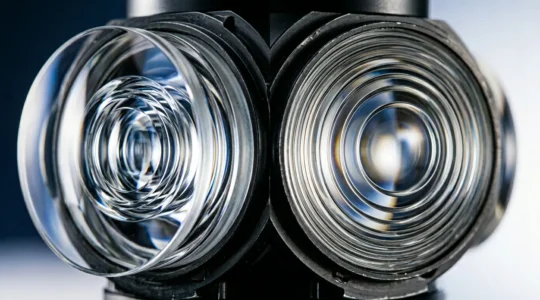
Fresnel vs Pancake Lenses: Is the Clarity Upgrade Worth the Price Hike?
Upgrading to Pancake lenses is about far more than just eliminating “god rays”; it’s a systemic shock that exposes every other bottleneck in your VR setup. The edge-to-edge clarity of Pancake lenses reveals compression artifacts and low-resolution textures that Fresnel’s…
Read more
ANC vs Passive Isolation: Which Is Safer for Commuting in Traffic?
The belief that Transparency Mode is a foolproof safety feature is a critical misconception; its reliability is not medical-grade and can create a false sense of security in traffic. Active Noise Cancellation (ANC) can delay your reaction to auditory cues…
Read more
TPU vs. Polycarbonate: The Materials Science of Surviving a Drop
The hardest phone case is not the safest. True drop protection comes from a material’s ability to dissipate impact energy, not just resist it. Thermoplastic Polyurethane (TPU) excels at absorbing and dissipating shock through material deformation, making it superior for…
Read more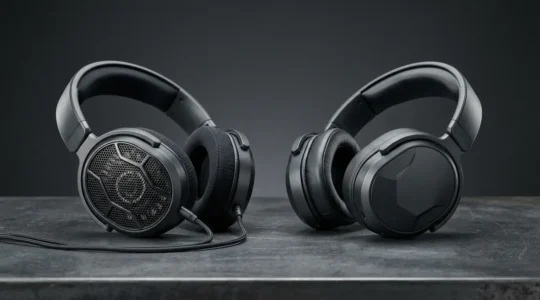
Open-Back vs. Closed-Back: Which Headset Design Gives You a Competitive Edge?
The best gaming headset isn’t just about an open or closed-back design; it’s a complete system where comfort, audio precision, and material durability combine to create a true competitive advantage. Open-back headsets offer a natural soundstage ideal for spotting footsteps…
Read more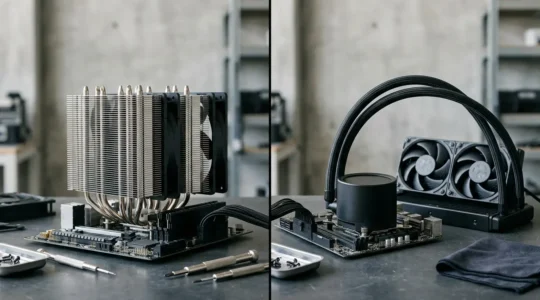
Air Cooling vs AIO Liquid Cooling: Which Is Safer for Long-Term Maintenance?
The long-term safety of your PC depends less on choosing air vs. liquid cooling and more on your ability to spot and manage signs of degradation. Air coolers are simpler but fail from dust buildup and fan bearing wear, which…
Read more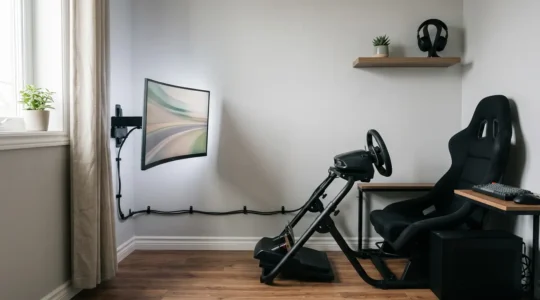
How to Build a Sim-Racing Setup in a 100sqft Room Without Clutter?
Building an immersive sim rig in a small space isn’t about foldable furniture; it’s about mastering sensory design to create a “phantom cockpit.” Eliminate sensory ‘noise’ like audio lag and fan whine to protect the immersion bubble. Use light, sound,…
Read more